
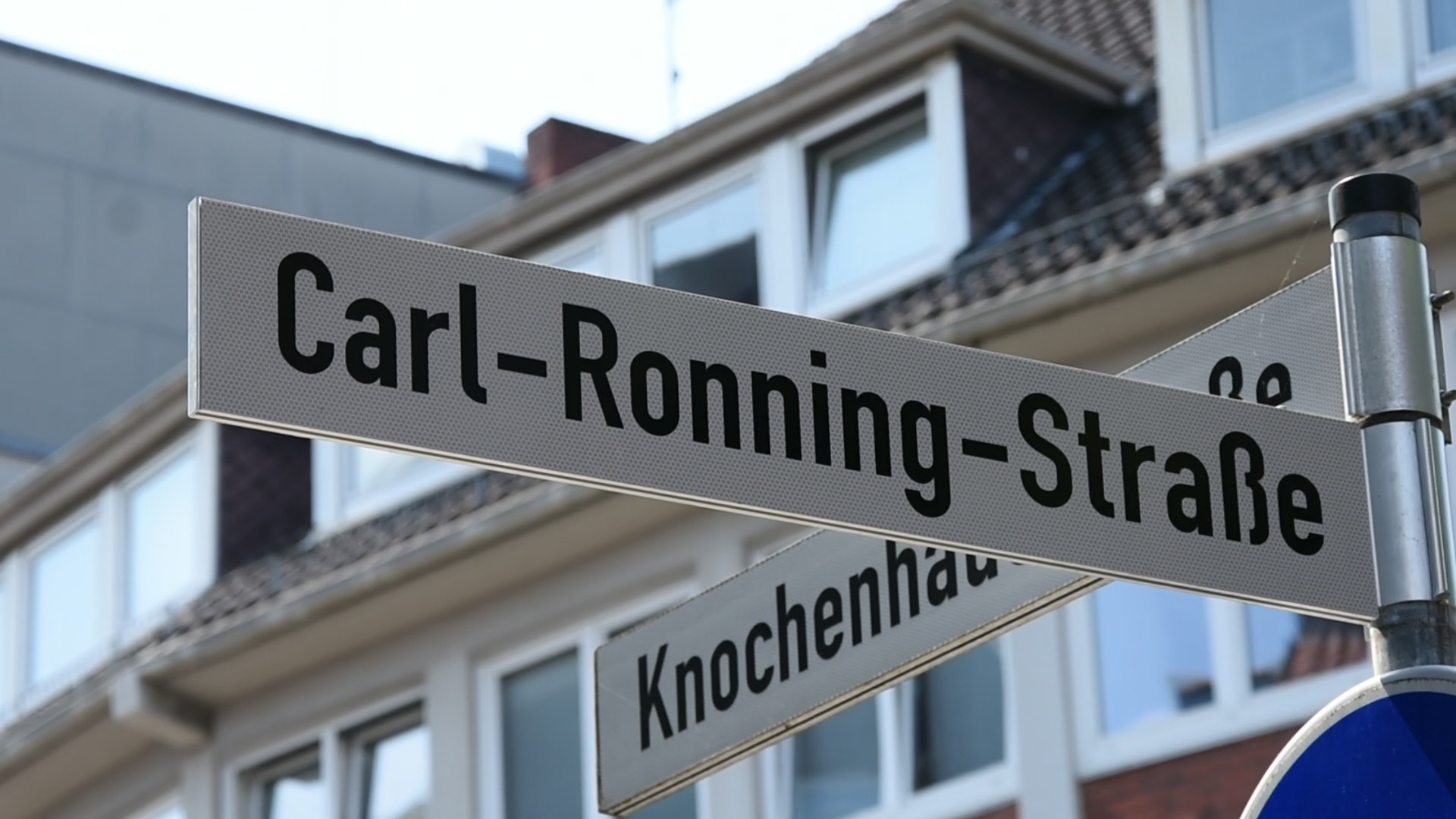
On 26 May 1950, at the request of building senator Emil Theil, the Bremen Senate resolved to name the planned road between Knochenhauerstraße and Pelzerstraße "Carl-Ronning-Straße". This honoured the coffee merchant Carl Ronning for his "great services" to Bremen's coffee trade. Carl Ronning was born in Bielefeld in 1863, moved to Bremen in 1892 and initially worked at Roselius & Co. In 1894 he founded the trading company and coffee roastery Carl Ronning. The company had its own plantation in what was then German East Africa. On the plantation at the foot of Kilimanjaro in Machame (formerly Madschame), near the town of Moshi in present-day Tanzania, "German coffee" was grown. In the region where the plantation was located lives the ethnic group of the Chaga (also Chagga or Wachagga); they were forced by the German colonial powers to grow coffee and other raw materials profitable to the colonisers, in order to become part of the money economy and thus be able to pay taxes in cash. Resistance and uprisings such as the Maji-Maji rebellion were suppressed with military force. Thousands of local people were killed. Although the Carl Ronning trading company and its customers here in Bremen and the surrounding area are not themselves known for having driven colonisation forward, they profited from the colonial system that oppressed and exploited the local population. At Sögestraße No. 54 the Ronning House, which housed Carl Ronning's shop, can still be found today. After the Second World War the building was rebuilt and triggered the so-called "gable dispute", which is described in more detail on a plaque at the Ronning House.